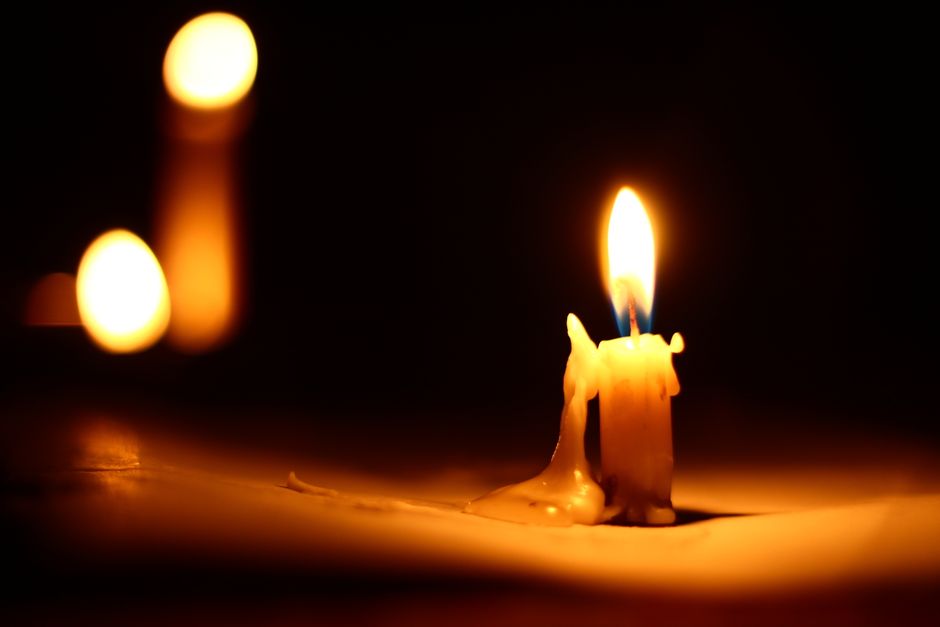
Candlelight does something no lamp can, and that is exactly why it deserves a little respect. A lit wick is an open flame sitting in your living room, on your nightstand, or next to the bar cart while you pour a drink. Treat it like the small fire it is and you get the glow without the gamble. These candle safety tips 2026 covers everything fire officials repeat year after year, plus the habits that keep a slow evening slow instead of stressful.
Why Candle Safety Still Matters in 2026
Fire service data makes the case better than any warning label. From 2009 through 2013, U.S. fire departments responded to an estimated 9,300 home structure fires that were started by candles, according to the North Arlington Fire Department. Those fires caused 86 deaths, 827 injuries, and $374 million in direct property damage. Candles accounted for about 3% of reported home fires during that period.
The National Candle Association, cited by Creative Candles, reports that roughly six percent of U.S. home fire injuries are caused by candles. The pattern behind those numbers is not mysterious. Fire marshals and safety pages repeat one root cause more than any other: a candle left burning with nobody watching it. Holiday messaging says the same thing in different words. Candles can be an essential part of a celebration, but used incorrectly they become a fire hazard.
None of that makes candles a bad idea. It makes the habits around them as important as the scent. A candle that is trimmed, placed well, and never left alone is a very different object from one forgotten on a coffee table overnight.
The Distance Rules: Start at 12 Inches, Then Give It Three Feet
Two numbers show up in nearly every official set of candle safety guidance, and they measure slightly different things.
The National Candle Association advises keeping candles at least 12 inches away from furniture, drapes, bedding, carpets, books, or any other flammable objects. Holiday guidance published in December 2025 repeats the same 12 inch figure for curtains, garlands, gift wrap, and seasonal décor.
Several fire departments go further. Avenel Fire's safety page recommends keeping candles at least three feet away from any flammable materials, and stresses using stable, nonflammable candle holders placed where a candle will not be knocked down or blown over.
The practical reading is simple. Twelve inches is the floor, three feet is the buffer. If a curtain can drift, a cat can leap, or a sleeve can swing past, add more room. Heat rises and fabric moves, so a candle tucked under a shelf or beside a curtain is a problem waiting for the smallest breeze.
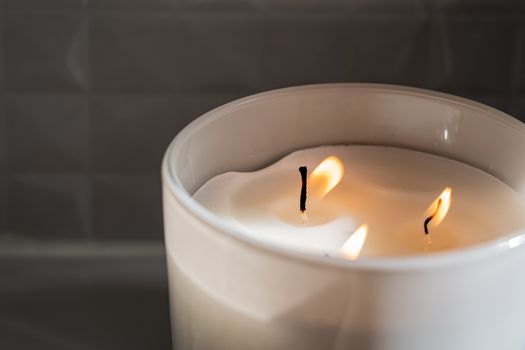
Photo by Castorly Stock on Pexels
Trim the Wick Before Every Single Burn
Wick length is the most overlooked detail in candle care, and it is the easiest one to fix. The National Candle Association's tips call for trimming wicks to ¼ inch before each use. Older safe-use guidance puts the range between 1/8 inch and 1/4 inch, so anywhere in that window works.
A wick that has grown too long feeds a larger and less predictable flame. Trimming it back keeps the burn controlled and helps the wax pool stay even, which is also how you get the most out of a small-batch candle instead of watching it tunnel down the middle. Trim before lighting, not after, and drop the trimmed bits into a bin rather than back into the wax.
Pair trimming with a time limit. Official guidance says not to burn candles more than four hours at a time. After four hours, put the flame out, let the candle cool completely, trim the wick again, and relight later if the evening is still going.
Choose a Holder That Cannot Tip
A candle holder is not decoration first. It is the thing standing between an open flame and your floor, your rug, or your bookshelf. Fire safety guidance is consistent on this point: use holders that are sturdy, made of nonflammable material, and not easy to tip over, and set them down on a stable surface.
Then think about placement. Candles belong where they cannot be knocked down or blown over, which rules out the edge of a coffee table, the arm of a sofa, a windowsill with a draft, and any spot a pet or a child can reach. A candle that wobbles when you nudge the table is telling you to move it.
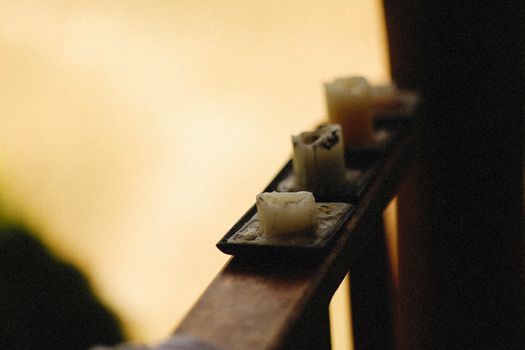
Photo by Alexey Demidov on Pexels
Places and Moments to Skip the Flame Entirely
Candle fires tend to happen in predictable situations. Fire officials flag several of them again and again:
- Extinguish all candles before going to sleep or leaving the room, without exception.
- Do not let children keep or use candles in their bedrooms. Candles belong under adult supervision.
- Never use lighted candles on or near a Christmas tree or other evergreens.
- Avoid passing lit candles from person to person.
- Keep flames clear of gift wrap, garlands, and holiday décor, keeping the 12 inch minimum in mind.
Bedrooms deserve their own note, because bedding and curtains both appear on the 12 inch list. If a candle lives in a bedroom, it should be one you blow out before you get into bed, not one that burns while you sleep. An unattended candle is the single most dangerous version of a candle.
Candle Care for Cocktail Hour at Home
Bottle to Flame candles are built for slow evenings, the kind with a drink in hand and a record on. Each scent is structured around the Mixologist's Approach, where base notes act as the spirit, mid notes as the sweetener, and top notes as the garnish. The Old Fashioned brings aged bourbon, clove bitters, muddled sugar, and worn leather. The Celebratory Brunch is lavender, champagne, pear blossom, and white florals. There is also Sauvignon Blanc with passion fruit, gooseberry, and green herbs, and Cabernet Sauvignon with dark fruit and a cedar backbone.
They are hand-poured in Denver in small batches, made with soy wax and phthalate-free fragrance oils, and they burn best with the same habits that keep any flame safe. Keep the wick trimmed to a quarter inch. Keep the burn under four hours. Set the candle on a sturdy, nonflammable holder that will not tip.
Bar carts and side tables need a second look, because they collect paper. Napkins, menus, coasters, packaging, and gift wrap are all things a flame should never meet. Give your candle its own clear footprint on the surface, away from the edges, and move it before you restock the cart with anything that could catch.

Photo by Taryn Elliott on Pexels
The Candle Safety Tips 2026 Checklist
Run through this list before you light anything:
- Trim the wick to ¼ inch, or between 1/8 inch and 1/4 inch.
- Set the candle in a sturdy, nonflammable holder on a stable surface.
- Clear at least 12 inches of space from anything flammable, and aim for three feet where you can.
- Move it away from drafts, curtains, shelves, and edges where it could be knocked over.
- Light it only when an adult is in the room and staying there.
- Burn for no more than four hours at a stretch.
- Extinguish it before bed, before leaving the room, and before leaving the house.
- Follow the extinguishing instructions that came with your candle, and check your local fire department's guidance if you are unsure which method suits the candle you own.
Frequently Asked Questions
How far should a candle be from curtains?
The National Candle Association recommends at least 12 inches between a candle and anything that can burn, including drapes, bedding, carpets, and books. Several fire departments suggest a wider margin of three feet from flammable materials. Because curtains can shift with air movement, treat 12 inches as the absolute minimum and give fabric more room whenever your space allows it.
How long can I safely burn a candle?
Official safe-use guidance says not to burn candles more than four hours at a time. After four hours, extinguish the flame, let the candle cool completely, and trim the wick before relighting. Staying under that limit keeps the flame smaller, the wax pool more even, and the whole situation easier to manage if you step away for a moment.
Can I leave a candle burning while I sleep or leave the house?
No. Fire marshals and safety organizations are unanimous on this point: extinguish all candles before going to bed or leaving the room, and never leave a lit candle unattended in an empty home. Sleeping or stepping out removes the one safeguard that matters most, which is a person who can react the second something goes wrong.
How short should I trim a candle wick?
Trim the wick to ¼ inch before each use, or anywhere between 1/8 inch and 1/4 inch. Do it before lighting rather than after, when the candle is cool and easier to handle. A properly trimmed wick keeps the flame at a controlled size and helps the candle burn cleanly instead of smoking or flaring up.
Should kids keep candles in their bedrooms?
No. Fire safety guidance says children should not keep or use candles in their rooms, and that candles should be used only under adult supervision. If a young person in your home wants candlelight, light it together in a shared space, keep it on a sturdy holder away from bedding and curtains, and blow it out before anyone heads to bed.
Shop Bottle to Flame
Every candle is hand-poured in small batches in Denver using 100% soy wax and phthalate-free oils. The glass tumbler is refillable — send it back for 20% off your next pour. Free shipping on orders over $50.
The Old Fashioned — $34.99 • The Celebratory Brunch — $34.99 • The Blanc — $34.99 • The Rouge — $34.99 • Day & Night Set — $64.99