
A candle poured by hand in a limited run gets handled differently than one moving down a production line. Small-batch makers mix and pour a set number of candles at a time, which means the person making them can watch each one rather than supervising a continuous stream of product. The practical result is more attention, more detail, and more control over how the finished candle actually burns.
That difference shows up in ways buyers can notice: how cleanly the wax burns, how accurately the scent matches its description, how long the candle lasts, and how much waste the whole process creates. In 2026, those details matter more than ever to people who treat a candle as part of a room's atmosphere rather than a disposable item.
What Small Batch Actually Means
Small batch describes a production approach, not a certification. Instead of running one enormous pour, a maker mixes and pours candles in limited quantities, often by hand, and repeats the process in separate batches. Each batch is a discrete project with its own measurements, its own pour, and its own quality check.
That structure matters because it gives the maker room to adjust. If a wick is pulling too hot or a fragrance is reading weak, the correction can happen in the next small run instead of being locked into thousands of units. As one small-batch maker puts it, working this way means more attention and detail, and more of the magic, goes into each individual candle.
There is no single industry definition of the term. Batch sizes vary widely between makers, so the label alone is not proof of anything. What the label signals is intent: fewer candles per run, more human involvement per candle.
The Benefits That Matter Most in 2026
Buyers weighing a hand-poured candle against a mass-produced one are usually comparing the same handful of things. The table below maps those concerns to how a small-batch approach addresses them.
| What buyers care about | How small-batch production addresses it |
|---|---|
| Burn quality | Better wick selection and longer, more consistent burns |
| Scent accuracy | More accurate fragrance integration across the batch |
| Ingredients | Cleaner ingredients, including 100% soy wax and phthalate-free fragrance oils |
| Indoor air | A cleaner, healthier burn that is better for you and for the room |
| Environmental footprint | Less waste and more efficient use of materials than mass production |
| Testing | Every batch can be checked for burn time, soot output, and melt pool width |
| Who you are buying from | A small business rather than an anonymous production run |
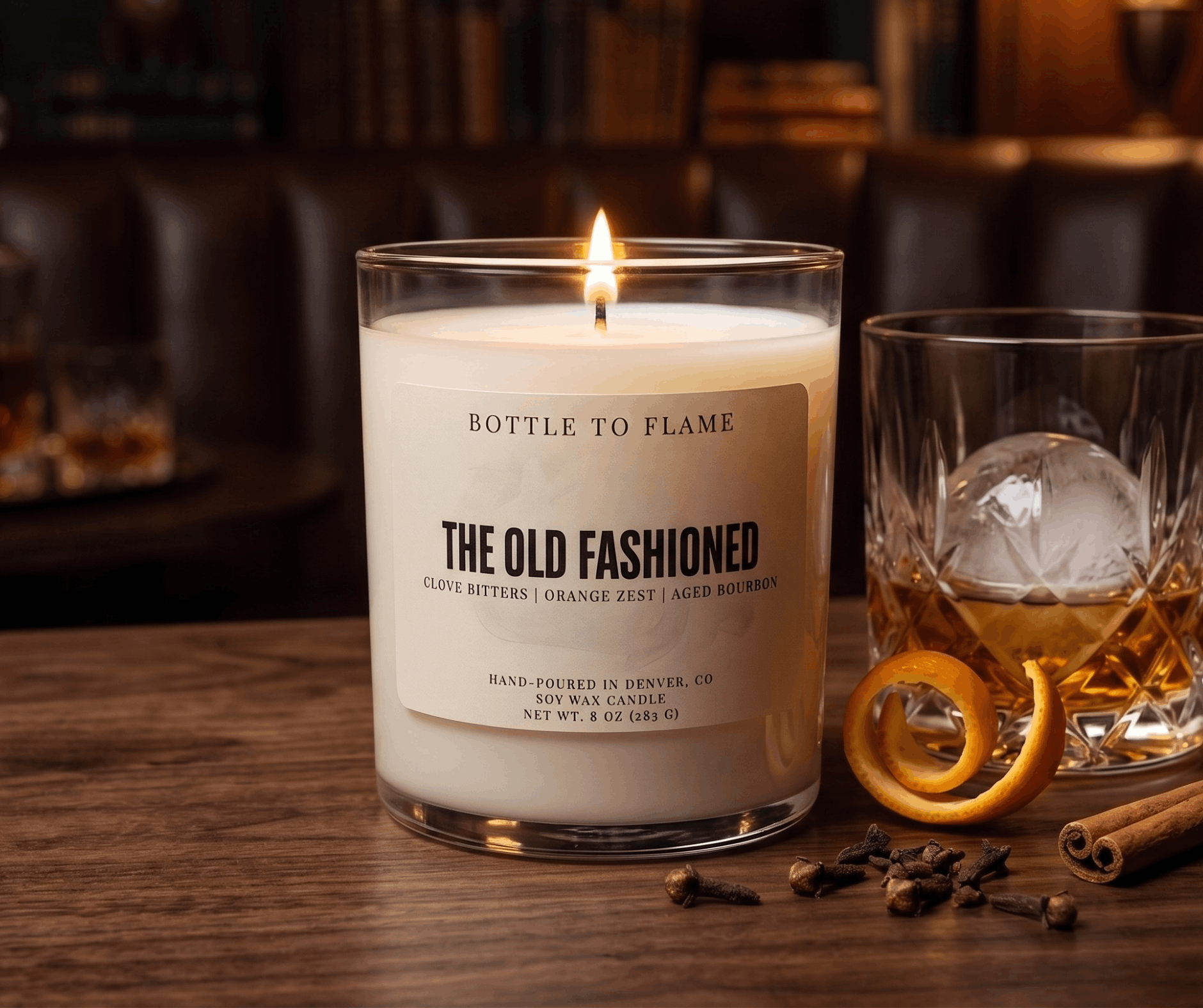
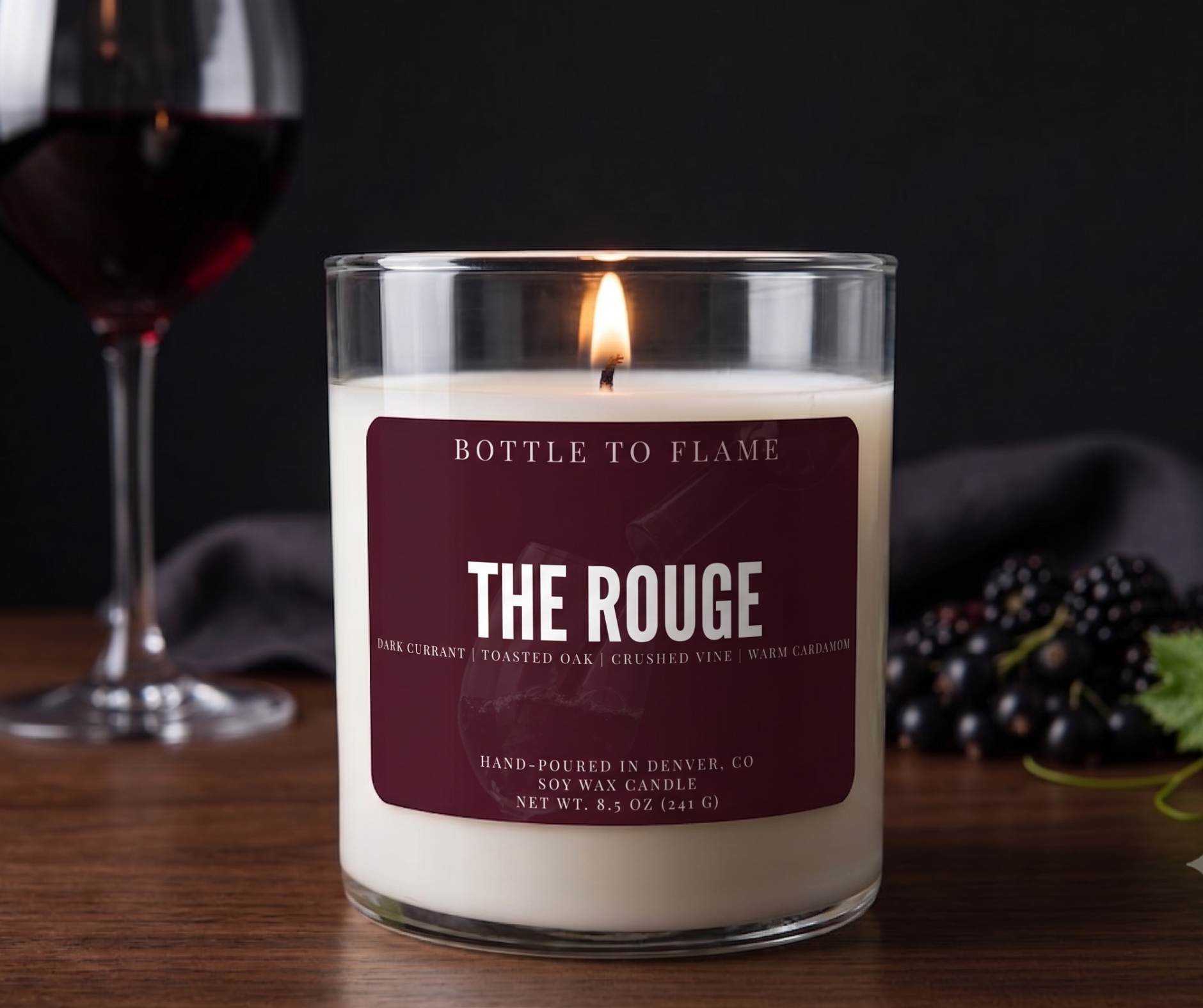
Bottle to Flame — Cocktail Candle Collection



A Cleaner Burn, for You and the Room
Ingredient choices are easier to control when a run is small. Because the maker is working with a limited volume of wax and oil, they can afford to be selective about what goes in. That selectivity is one reason small-batch candles often use soy wax and phthalate-free fragrance oils.
The payoff is a cleaner burn, which is a benefit for both the person breathing the air and the environment around them. Candles made with lower-quality inputs can smoke, produce soot, and leave a residue on walls and furniture over time. A candle that burns cleanly does the opposite. It scents a room without leaving behind evidence of the burn itself.
For anyone who lights a candle most evenings, this stops being a minor detail. It is the difference between a product you enjoy and a product you tolerate.
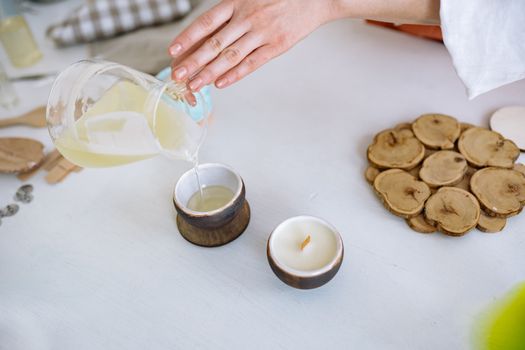
Photo by Yan Krukau on Pexels
Longer, More Consistent Burns
A candle that burns well is not an accident. It is the result of careful wick selection, correct oil load, and a pour that sets evenly. Small-batch production gives makers the freedom to fine-tune all three, which is why the outcomes tend to be longer and more consistent burns rather than a candle that tunnels, flickers, or drowns itself in wax.
Consistency also means the scent holds. Fragrance integration is more accurate when a batch is mixed in controlled quantities, because the oils distribute evenly through the wax instead of separating or settling unevenly. What you smell on the first light is close to what you smell three hours in.
Less Waste and More Efficient Use of Materials
Producing fewer candles at a time has an environmental upside that is easy to overlook. By working in smaller runs, a maker minimizes waste, uses resources more efficiently, and reduces the environmental impact that comes with mass production.
Sustainability also extends beyond the wax. Environmentally minded candle lines increasingly pair cleaner wax and fragrance with packaging choices like recyclable glass jars, and some makers go further by reporting carbon-neutral operations. These details are worth asking about directly, since claims in this category vary a great deal from brand to brand and not all of them are independently verified.
You Are Buying From a Person, Not a Production Line
When you order from a small-batch maker, the purchase supports a small business instead of a mass production run. That relationship changes the transaction in ways that go beyond sentiment. Questions get answered by someone who actually poured your candle. Feedback shapes the next batch. A scent you love has a chance of returning or being refined based on what customers say.
There is also the simple matter of uniqueness. Small-batch candles are more personal and often more distinctive in scent than the standard rotation found on big-box shelves. A maker who is not chasing national distribution can build a candle around a specific mood, memory, or flavor instead of a focus-grouped profile.
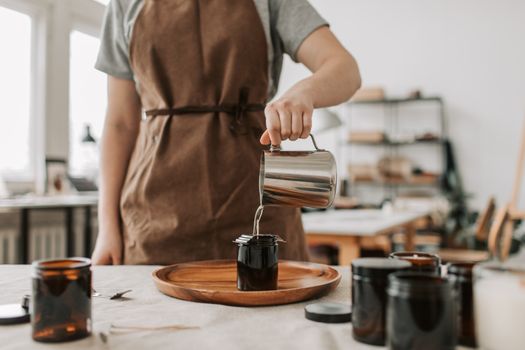
Photo by Vlada Karpovich on Pexels
Why 2026 Candle Buyers Are Paying Attention
Candle making guidance published for 2026 places heavy emphasis on testing. The recommendation is that every candle batch be checked for full burn time, soot production, and melt pool width before it goes out the door.
That is a lot of work for a large operation to apply to every run, and a natural fit for a small one. Batch testing is essentially built into the small-batch model, because each batch is already a discrete unit that can be evaluated, adjusted, and repeated. When you buy from a maker who tests, you are buying verified performance rather than an assumption.
Interest in environmentally friendly candles has been climbing alongside this. Buyers now ask about wax type, fragrance oils, and vessels as a matter of course, and they expect honest answers. Long-lasting scent is one of the qualities that keeps coming up in conversations about environmentally friendly candle options, which makes the burn-quality question both a performance issue and a value issue.
How Bottle to Flame Applies the Small-Batch Idea
Bottle to Flame is a small-batch, hand-poured candle brand based in Denver, Colorado, built around the idea of capturing the complexity of a perfectly poured drink in a slow-burning candle. Every scent is constructed using what the brand calls the Mixologist's Approach, where base notes act as the spirit, mid notes as the sweetener, and top notes as the garnish.
That framework is easier to execute in small runs, where each layer of the fragrance can be adjusted without reworking an entire production cycle. The Old Fashioned leans on aged bourbon, clove bitters, muddled sugar, and worn leather for a dark, rich character. The Celebratory Brunch pairs lavender, champagne, pear blossom, and white florals for something brighter and crisper. Sauvignon Blanc and Cabernet Sauvignon round out the lineup with bright green-herb freshness on one side and dark fruit with a cedar backbone on the other.
All of it is poured by hand, in batches, using soy wax and phthalate-free fragrance oils. Candles ship from bottletoflame.com and from the brand's Etsy shop, and the approach to each scent is closer to composing a drink than to assembling a product.
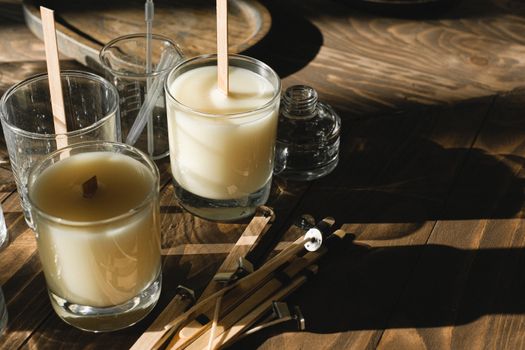
Photo by Anna Shvets on Pexels
How to Spot a Genuinely Small-Batch Candle
Because the term is unregulated, a little scrutiny goes a long way. A few questions separate a real small-batch operation from a label used as decoration.
- Does the brand name its wax and fragrance oils, or keep them vague?
- Does it describe its batches and pouring process in specific terms?
- Does it say anything about testing for burn time, soot, or melt pool?
- Can you get a real answer to a question about a specific scent?
- Does the brand explain how its scents were built, not just what they smell like?
Brands that pour in small runs tend to talk about the process without prompting, because the process is the product. If the only thing on the page is a mood photo and a scent name, that tells you something too.
Caring for a Hand-Poured Candle
A well-made candle rewards a little attention. Follow the care and safety instructions that come with your specific candle, since guidance can differ by jar size, wax blend, and wick type. Trimming the wick and allowing the wax to reach a full melt pool during the early burns are the habits most makers emphasize, and they are the ones that protect the burn quality the candle was built for.
Buying small batch is ultimately a bet on craft. You are paying for a candle someone tested, adjusted, and poured by hand, and the benefits show up in the burn, the scent, and the fact that a real person stands behind it.
Frequently Asked Questions
Is a small-batch candle actually better than a mass-produced one?
Not automatically, but the model makes quality easier to achieve. Small runs allow better wick selection, more accurate fragrance integration, cleaner ingredients, and longer, more consistent burns. Each batch can be tested for burn time, soot, and melt pool width before it ships. The advantage comes from the process, so it depends on whether the maker actually uses it.
How can I tell if a candle is really made in small batches?
Look for specifics. A genuine small-batch maker will name the wax and fragrance oils, describe how batches are poured, and talk about testing. They will also answer questions about individual scents with detail rather than a canned reply. Vague language plus a rustic label is not evidence of anything by itself.
Are small-batch candles more expensive?
Batch size alone does not set the price. Cost depends on the wax, the fragrance oils, the vessel, and how the maker sources materials. What is worth comparing is what you get for the money: burn time, scent accuracy, and whether the maker tests each batch. Those factors tell you more than the label does.
What should I check before buying a candle in 2026?
Ask about wax type, whether the fragrance oils are phthalate-free, and whether batches are tested for burn time, soot production, and melt pool width. If sustainability matters to you, ask about the vessel and whether packaging is recyclable. Long-lasting scent and a clean burn are the qualities buyers keep coming back to.
Why do soy candles show up so often in small-batch lines?
Soy wax is described as clean burning and long lasting, which fits the quality goals small-batch makers are working toward. It also takes fragrance well, which helps when a maker is building a layered scent profile rather than a single flat note. Combined with phthalate-free oils, it supports a cleaner burn for you and the room.
Shop Bottle to Flame
Every candle is hand-poured in small batches in Denver using 100% soy wax and phthalate-free oils. The glass tumbler is refillable — send it back for 20% off your next pour. Free shipping on orders over $50.
The Old Fashioned — $34.99 • The Celebratory Brunch — $34.99 • The Blanc — $34.99 • The Rouge — $34.99 • Day & Night Set — $64.99